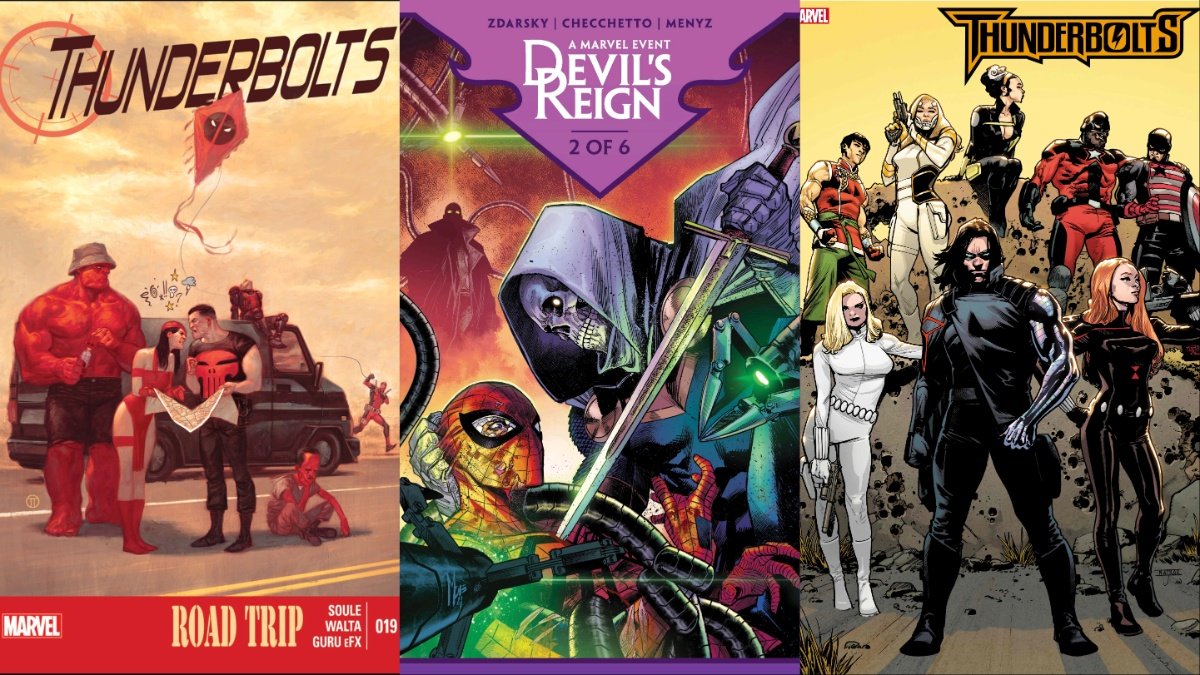
Few comic book teams have consistently challenged reader expectations quite like the Thunderbolts. From their shocking debut as presumed heroes to their constant, dramatic shifts in roster, leadership, and mission, the Thunderbolts Comic's Impact & Legacy is undeniably one built on a bedrock of reinvention. This isn't just a team; it's a thematic experiment in the fluid nature of heroism, villainy, and the often-blurry line between the two.
What started as a masterful deception quickly evolved into a multifaceted exploration of second chances, moral ambiguity, and the very concept of redemption in a universe teeming with black-and-white certainties. The Thunderbolts don't just endure; they redefine themselves with every new era, making them one of Marvel's most fascinating and consistently relevant properties.
At a Glance: The Thunderbolts' Enduring Allure
- The Core Concept: Supervillains posing as heroes, then often genuinely seeking redemption, or being forced into government service.
- Born from Deception: Famously revealed as the Masters of Evil in disguise, led by Baron Zemo, a twist that shook the comic world.
- A Roster in Flux: The team's identity is defined by its ever-changing lineup and leadership, including Hawkeye, Norman Osborn, Luke Cage, Red Hulk, and Winter Soldier.
- Themes of Redemption: A primary focus on whether villains can truly change, earn trust, and perform heroic deeds.
- Moral Ambiguity: Operating in the gray areas, often under duress or for ulterior motives, challenging traditional hero narratives.
- Reflecting the Marvel Universe: The team often serves as a lens for major Marvel events, embodying their political and ethical ramifications.
- Legacy of Reinvention: Their consistent ability to re-contextualize themselves ensures their lasting impact and appeal, extending even to the MCU.
The Thunderbolts' DNA: A Legacy Forged in Deception and Reinvention
Imagine a world where your greatest heroes — the Avengers, the Fantastic Four — are gone, presumed dead after a cataclysmic event. Then, new champions emerge, seemingly out of nowhere, bearing familiar-sounding names and promising to protect the innocent. This was the setup crafted by Kurt Busiek and Mark Bagley in The Incredible Hulk #449 (January 1997) and the subsequent Thunderbolts #1 (April 1997). The public embraced them. Readers were intrigued.
Then came the reveal: a narrative bombshell that reverberated through the industry. These "new heroes" were, in fact, the Masters of Evil, led by Baron Helmut Zemo, disguised as Citizen V. Their goal? To gain public trust and access to resources, using their newfound popularity for nefarious ends.
This audacious twist didn't just sell comics; it laid the foundation for everything the Thunderbolts would become. It was a masterclass in meta-narrative, forcing readers to question what they thought they knew about heroism and villainy. The initial deception quickly morphed into a profound exploration of identity as some members, like Songbird, Atlas, and MACH-I (formerly Beetle), began to genuinely enjoy being heroes, finding a purpose beyond their villainous pasts. This internal conflict, the struggle between old habits and new aspirations, became the enduring heart of the Thunderbolts, setting them apart from virtually every other team in the Marvel Universe.
The Ever-Shifting Roster: A Chronicle of Identity Crises & Redemptions
The Thunderbolts' history isn't linear; it's a tapestry woven with constant reconfigurations, reflecting different philosophies on crime, punishment, and redemption. Each major iteration has left an indelible mark, demonstrating the team's incredible adaptability and the versatility of its core concept.
Baron Zemo's Original Vision: The Seeds of Genuine Heroism
The original Thunderbolts—a lineup including Beetle (Abe Jenkins, becoming MACH-1), Fixer (Techno), Goliath (Atlas), Screaming Mimi (Songbird), and Moonstone (Meteorite)—were all in on Zemo's scheme. But as they performed heroic acts, the line between pretense and reality blurred. They experienced public adoration, a sense of purpose, and even camaraderie. This gradual embrace of heroism, particularly by characters like Songbird, led to their eventual rebellion against Zemo, proving that even the darkest hearts could be swayed by the light of public recognition and personal growth. It was a powerful statement: true heroism isn't just about powers, but about choice.
Hawkeye's Moral Compass: Guiding the Wayward
When former Avenger Hawkeye took the reins, he offered the team a genuine path to atonement. Under his leadership, the Thunderbolts sought pardons for their past crimes and actively fought other supervillains. This era was crucial for solidifying the idea of the Thunderbolts as a legitimate, if unconventional, force for good. Hawkeye’s integrity challenged his teammates to be better, leading to significant character development, such as Zemo’s complex mind transfer and Atlas’s poignant resurrection through a merger with Dallas Riordan. It was here that the Thunderbolts truly earned their anti-hero stripes, showcasing exploring supervillain redemption arcs as a central theme.
The Dark Reign: Osborn's Corrupt Vision
The "Civil War" event profoundly impacted the Thunderbolts. Baron Zemo, with his "Thunderbolt Army," was tasked with hunting unregistered heroes, escalating the team's role into that of government-sanctioned enforcers. However, it was after "Secret Invasion" that the Thunderbolts took their darkest turn under Norman Osborn.
As director of H.A.M.M.E.R., Osborn leveraged the team's post-Civil War success to ascend to immense power. His government-sponsored Thunderbolts, featuring Moonstone, Bullseye, Penance, and Venom, became a ruthless instrument of his will, tracking down perceived threats. This era famously paved the way for the "Dark Avengers," where Osborn's villains donned the guises of Earth's Mightiest Heroes. This period cemented the Thunderbolts' legacy as a team that could be both saviors and oppressors, often blurring the line entirely, offering a grim reflection on the nature of authority and power. For more on this era, you might want to delve into the history of the Dark Avengers.
Luke Cage's Redemption Project: A Second Chance Behind Bars
With the "Heroic Age" came a renewed focus on rehabilitation. Captain America tasked Luke Cage with leading a new iteration of the Thunderbolts, comprised of criminals serving time at the Raft prison. This team, including Ghost, Moonstone, Juggernaut, Crossbones, and Man-Thing, was offered a chance at redemption through dangerous missions, with U.S. Agent as their warden. This era explored the complexities of forced heroism and the difficult path to genuine change, highlighted by Juggernaut’s transformation into Kuurth during "Fear Itself" and the team's time-traveling escapades. It was a grounded, character-driven take on the concept, focusing on the human element within the super-powered.
Red Hulk's Brutal Black Ops: A Different Kind of Strike Force
The Marvel NOW! era saw yet another radical shift. General Thaddeus "Thunderbolt" Ross, as Red Hulk, assembled a non-government-sponsored, morally ambiguous strike team. His lineup—Deadpool, Elektra, Agent Venom, and the Punisher—was less about redemption and more about brutal efficiency, tackling threats with extreme prejudice. This iteration was defined by internal conflicts, distrust, and the machinations of Red Leader, eventually leading to the Punisher hunting his former teammates. It was a darker, more cynical take, emphasizing the inherent danger and chaos of grouping such volatile individuals.
Winter Soldier's Covert Operations: Protecting a Cosmic Cube
Bucky Barnes, the Winter Soldier, brought a new focus to the team: preventing SHIELD's misuse of Kobik, a sentient Cosmic Cube. This team, featuring reformed members like Fixer, Atlas, Moonstone, and MACH-X, found themselves clashing with Zemo, illustrating the perpetual struggle against past influences. The defections of Fixer, Moonstone, and Atlas to Zemo's Hydra highlighted the fragile nature of their reform, showcasing the deep-rooted loyalties and ideological divides that constantly threaten the Thunderbolts' purpose. This era further diversified the evolution of Marvel's anti-heroes.
Mayor Fisk's Pragmatic Control: Law and Order, Gotham Style
In a twisted twist of fate, even New York City Mayor Wilson Fisk (the Kingpin) found a use for the Thunderbolts. He led various iterations, first enlisting Zemo's team (Moonstone, Ghost, Fixer, Radioactive Man, Jigsaw) to hunt the Punisher, then assembling another diverse group (Taskmaster, Mister Fear, Rhino, Star) to combat Knull and enforce his anti-vigilante laws. Fisk’s cynical approach stripped away much of the pretense of redemption, using the team as a blunt instrument of control, blurring the lines between justice and authoritarianism.
Hawkeye's Second Stint & Bucky's Revolution: A Return to Purpose
More recently, Hawkeye once again found himself leading the Thunderbolts, assembling a new team (America Chavez, Power Man, Persuasion, Gutsen Glory, Spectrum, Eegro) to face cosmic threats like Nightmare. This felt like a return to the team's more heroic, if still unconventional, roots.
Following this, Bucky Barnes, under the mantle of "the Revolution," took command, gathering a formidable group including Contessa Valentina Allegra de Fontaine, Destroyer, Red Guardian, Black Widow, White Widow, Shang-Chi, and U.S. Agent. Their mission? To eliminate the Red Skull, a clear-cut objective that placed them firmly in the realm of morally grey heroes. Even Doctor Doom briefly formed his own "Fulgar Victoris" team, only to be defeated by Bucky's Thunderbolts, further emphasizing the constant state of flux.
Beyond the Roster: Why the Thunderbolts Resonate
The sheer volume of team iterations isn't just for shock value or sales; it's central to Thunderbolts Comic's Impact & Legacy. Each new lineup, each shift in leadership, asks fundamental questions about identity, power, and the possibility of change.
The Anti-Hero Archetype Perfected
The Thunderbolts didn't invent the anti-hero, but they certainly perfected Marvel's take on it. Their stories consistently grapple with the idea that individuals with immense power, regardless of their past sins, can still contribute to the greater good—whether through genuine desire, forced conscription, or manipulative circumstances. Readers are drawn to the internal struggle, rooting for characters like Songbird to fully shed their villainous skin, or watching with morbid fascination as others, like Moonstone, flirt with the edge of chaos. This complexity makes them profoundly human, despite their extraordinary abilities. If you're looking to dive deeper into these multifaceted characters, you can always Discover the Thunderbolts comic itself.
Redemption and Moral Ambiguity: The Core Struggle
At its heart, the Thunderbolts narrative is a profound exploration of redemption. Can a villain truly change? Can society ever forgive them? The comic consistently challenges the notion of "good" and "evil" as fixed states, instead presenting them as choices, daily struggles, and ever-evolving journeys. This moral ambiguity forces readers to confront their own biases and assumptions about who deserves a second chance and what true heroism entails. The ever-present question of whether a Thunderbolts member is genuinely reformed or simply playing a long game is a constant source of narrative tension.
Social Commentary: Trust, Power, and Public Perception
The Thunderbolts often serve as a potent vehicle for social commentary. Through their story, Marvel has explored themes of:
- Public Trust: How easily can the public be deceived, and how do perceptions of heroes shift?
- Government Overreach: What happens when authorities weaponize supervillains for their own agendas?
- Rehabilitation vs. Punishment: Is a prison sentence enough, or can meaningful work truly reform an individual?
- The Nature of Control: Who gets to decide who is a hero and who is a villain?
These layered questions resonate deeply, making the Thunderbolts more than just a superhero team; they are a mirror reflecting societal anxieties and political realities.
The Power of Narrative Reinvention: Why Constant Reboots Work
In an industry prone to reboots and relaunches, the Thunderbolts thrive on it. Unlike other teams where continuity shifts can feel jarring, reinvention is woven into their very fabric. Each new iteration feels like a fresh experiment, a new hypothesis about the nature of heroism and villainy. This willingness to completely retool the team, its purpose, and its roster is not a weakness but a core strength, demonstrating the mechanics of comic book reboots as a tool for deepening, rather than erasing, a narrative. It keeps the series fresh, unpredictable, and endlessly intriguing.
Common Questions & Misconceptions About the Thunderbolts
Given their complex history, it's natural for readers to have questions.
Are the Thunderbolts heroes or villains?
They are both, and neither, often simultaneously. The Thunderbolts are defined by their liminal state. They are former villains who have performed heroic acts, sometimes willingly, sometimes under duress, and sometimes with ulterior motives. Their heroic status is often conditional, dependent on their current leadership, mission, and the individual choices of their members. It's best to think of them as an anti-hero team, constantly navigating the ethical grey areas.
Is it hard to follow with so many changes and reboots?
It can be, but it's also part of the fun! While jumping into the middle of a continuous run might be confusing, the episodic nature of the Thunderbolts means you can often pick up a specific "era" or run—like Hawkeye's, Norman Osborn's, or Luke Cage's—and enjoy it as a standalone story with its own distinct flavor. Each creative team brings a fresh perspective, making it accessible to new readers while still rewarding long-time fans.
How are the Thunderbolts different from DC's Suicide Squad?
While both teams feature incarcerated villains performing dangerous missions, their core philosophies often diverge. The Suicide Squad is largely about expendability, using "bad guys" for "bad missions" with little expectation of redemption, often with a bomb in their head as incentive. The Thunderbolts, especially in many of its iterations, frequently explores the possibility of genuine redemption, the struggle to overcome a villainous past, and the complex public perception of these efforts. While some runs lean into the "expendable assets" trope, the overarching narrative often circles back to the question: can these individuals truly change for the better?
The Legacy Continues: Thunderbolts in the MCU
The enduring Thunderbolts Comic's Impact & Legacy is perhaps best highlighted by their upcoming live-action adaptation in the Marvel Cinematic Universe. This move signifies the mainstream recognition of their unique appeal and the power of their core concept.
The announced MCU team — featuring Winter Soldier, Black Widow (Yelena Belova), Taskmaster, U.S. Agent (John Walker), Red Guardian, and Contessa Valentina Allegra de Fontaine — is a potent mix of former antagonists, government assets, and morally compromised individuals. Their mission, involving the recovery of "Bob" (revealed to be the Sentry), perfectly encapsulates the comic's penchant for using dangerous individuals for even more dangerous tasks. The MCU's version promises to bring the same blend of uneasy alliances, internal conflicts, and challenging ethical dilemmas that have defined the comics for decades. It's a testament to how adaptable and relevant this concept remains, capable of captivating new audiences while honoring its rich, complex comic book roots.
Your Next Read: Embracing the Chaos of Change
The Thunderbolts are more than just a rotating cast of characters; they are a testament to the idea that storytelling can thrive in constant flux. Their enduring appeal lies in their fearless exploration of redemption, the nature of power, and the ever-present human struggle between good and evil.
If you're intrigued, you don't need to start from the very beginning. Pick an era that resonates with you:
- For the foundational twist: Start with the original Kurt Busiek run.
- For pure villainy turned heroics: Hawkeye's leadership offers a clear path.
- For dark government intrigue: Norman Osborn's "Dark Reign" era is unforgettable.
- For raw redemption in action: Luke Cage's Raft team is a compelling read.
No matter where you start, the Thunderbolts offer a unique, thrilling, and thought-provoking journey through the moral complexities of the Marvel Universe. They challenge us to look beyond labels, reminding us that even the darkest past can hold the seeds of a heroic future, making them one of Marvel's most impactful and consistently reinvented teams.