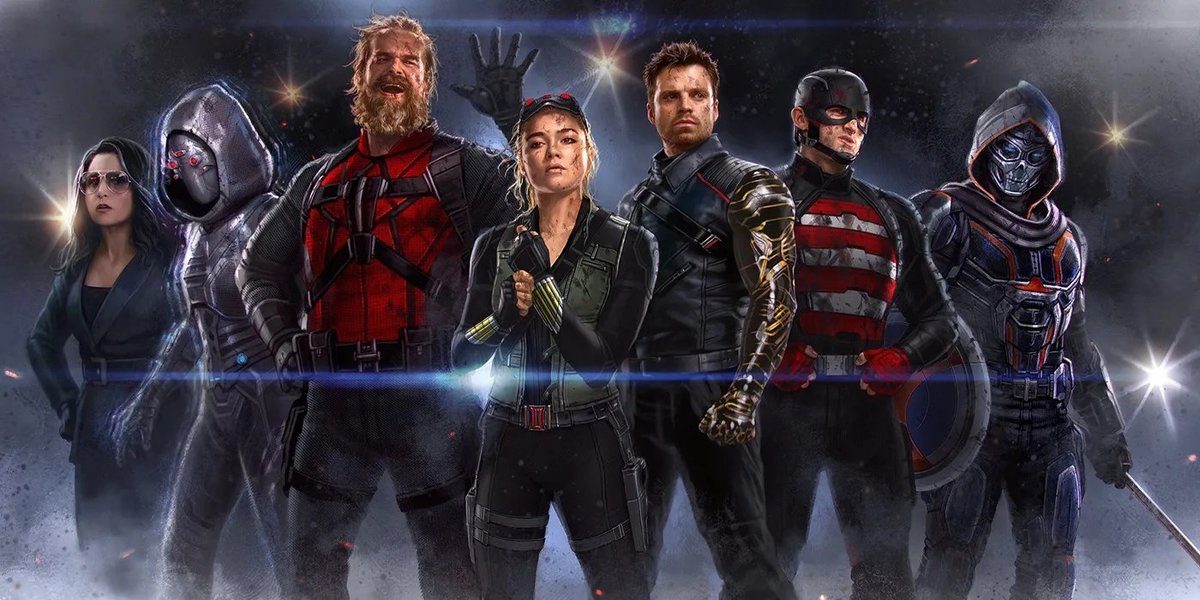
The Thunderbolts. The name itself conjures images of superpowered individuals walking a tightrope between redemption and villainy. Born from the ashes of Onslaught's devastating attack on New York City in the mid-'90s, they initially presented themselves as new heroes, stepping up when the Avengers and Fantastic Four were gone. What the public didn't know was their darker, ulterior motive: they were actually the Masters of Evil in disguise, manipulating public trust for their own nefarious ends. This foundational twist defined the team's tumultuous future, leading to an astonishing array of rosters, many of them Lesser-Known Thunderbolts Teams & Incarnations that often went far beyond their original premise.
With Marvel Studios recently announcing a live-action MCU adaptation – a roster that has already stirred considerable fan debate due to its departure from comic book norms – and a new comic series featuring a Hawkeye-led team in New York City, there's never been a better time to look back at the many fascinating, forgotten, and sometimes downright bizarre iterations of this complex group.
At a Glance: Unpacking the Thunderbolts' Diverse Legacy
- More Than Just One Team: Discover why the Thunderbolts name has been carried by dozens of vastly different groups, from covert government ops to outright villainous squads.
- The Original Sin: Understand the team's '90s origins and the fundamental deception that shaped its future.
- Failed Experiments: Explore rosters that were poorly received, short-lived, or took the concept in unexpectedly strange directions.
- Unexpected Leaders: See how characters like Kingpin, Red Hulk, Luke Cage, and even the Winter Soldier have tried to steer the Thunderbolts' turbulent path.
- Beyond Redemption: Witness how some incarnations leaned into villainy, while others genuinely strived for heroism.
- The Impact of the Obscure: Learn why even the less successful teams contribute to the rich, convoluted tapestry of the Thunderbolts' history.
The Ever-Shifting Sands: Why the Thunderbolts Are So Hard to Pin Down
The very concept of the Thunderbolts is inherently unstable. Built on a lie, then repurposed for everything from government-mandated rehabilitation to covert ops, the team has consistently reflected the moral ambiguities of its members and handlers. This dynamic has resulted in an organizational fluidity rarely seen in other Marvel teams. Where the Avengers have a core mission, and the X-Men a core philosophy, the Thunderbolts operate in a constant state of redefinition, making their history a goldmine of fascinating, albeit sometimes fleeting, experiments.
Marvel's announcement of a Thunderbolts film has naturally focused attention on the most popular or iconic versions of the team. Yet, the true depth of their narrative lies in the dozens of Lesser-Known Thunderbolts Teams & Incarnations that have graced the comic pages. These lesser-known groups offer a deeper understanding of the Thunderbolts' potential, the pitfalls of their premise, and the sheer narrative ambition Marvel writers have poured into the concept.
The Deep Cuts: Unearthing the Thunderbolts' Most Obscure Lineups
Let's pull back the curtain on some of the more surprising, short-lived, or critically divisive Thunderbolts teams. This journey will take us through the unexpected turns and experimental phases that make the Thunderbolts’ history so uniquely compelling, often moving beyond the traditional hero-villain dynamic.
The Ultimate Brawling League: When Thunderbolts Became a Fighting Game
Imagine the Thunderbolts comic series, 75 issues deep into exploring complex themes of redemption and identity, suddenly pivoting to an entirely different genre. That's precisely what happened with the Ultimate Brawling League, first introduced in Thunderbolts (Vol. 1) #76 by John Arcudi, Francisco Ruiz Velasco, and Dave Sharpe.
This incarnation, ranked 12th on our list of more obscure teams, dramatically shifted focus to superpowered fighters participating in a gladiatorial-style competition. Characters like Daniel Axum, also known as The Battler, took center stage, leaving behind the team's traditional narrative roots. This radical departure from the established premise was poorly received by long-time fans and critics alike, leading to its swift discontinuation after only a handful of issues. It stands as a stark reminder of how far afield the Thunderbolts brand could occasionally wander, often to its detriment.
Dark Avengers II: Osborn's Second String of Villains
Norman Osborn's first Dark Avengers team famously usurped the Avengers' mantle during the Dark Reign era. But after his inevitable downfall, Osborn wasn't done playing puppet master. The Dark Avengers II incarnation, appearing in New Avengers (Vol. 2) #18 by Brian Michael Bendis and Mike Deodato, was his next attempt to exploit the concept, albeit under a new handler.
These new villains were hand-picked to serve as a replacement Thunderbolts team, but with a significant catch: the government, wary of their predecessors, implanted them with destructive nanites for control. This added a layer of dangerous vulnerability, ensuring their compliance through pain and potential destruction. Their tenure was short-lived, eventually disbanding after a chaotic stint that involved them working with U.S. Agent in a twisted reality. Ranked 11th, this team highlights the perpetual struggle between utilizing dangerous individuals and maintaining control over them.
Kingpin's Thunderbolts: A Criminal's Attempt at Legitimacy
Mayor Wilson Fisk, the Kingpin of Crime, has always blurred the lines between law and lawlessness. His involvement with the Thunderbolts saw Baron Zemo briefly return as Citizen V, aided directly by Fisk to assemble a new version of the team. This Kingpin's Thunderbolts iteration, which debuted in Punisher (Vol. 12) #13 (Matthew Rosenberg, Szymon Kudranski, Antonio Fabela, Cory Petit), brought together original villain members and even featured Jigsaw disguised as Paladin.
This team, ranked 10th, was a masterclass in criminal opportunism, with Fisk using the Thunderbolts name to serve his own agenda in New York City. Unfortunately for Fisk, the team quickly ran afoul of the Punisher, who, alongside his own improvised squad including Rachel Cole-Alves, Moon Knight, Black Widow, and Ghost Rider, swiftly dismantled them. It's a testament to the Thunderbolts' complex legacy that even a criminal mastermind like Kingpin would try to leverage its brand, only to find himself outmaneuvered by an even more ruthless vigilante.
Villains For Hire (King in Black/Devil's Reign): The Mayor's Disposable Army
Kingpin's ambition didn't end with a single Thunderbolts team. During his controversial tenure as Mayor of New York City, he formed multiple squads of villains, notably during major crises. The Kingpins' Villains For Hire, first seen in King in Black: Thunderbolts (Vol. 1) #1 (Matthew Rosenberg, Juan Ferreyra, Joe Sabino), was initially led by Taskmaster during the King in Black event. Fisk's plan? To send them to their doom, clearing the city's supervillain roster in one fell swoop.
Ranked 9th, this cynical application of the Thunderbolts concept saw Fisk expanding his disposable army during Devil's Reign with members like Crossbones, Shocker, Agony, Kraven, Typhoid Mary, Electro, Whiplash, and even U.S. Agent. This larger roster, however, ultimately led to his—and their—downfall, as the sheer number of volatile personalities and conflicting agendas proved too much to control. It showcases the recurring theme of power struggles and betrayal within many Thunderbolts teams.
Dark Reign: Osborn's Covert Strike Force
When Norman Osborn ascended to power during Dark Reign, transforming S.H.I.E.L.D. into his personal organization, H.A.M.M.E.R., his original Thunderbolts team evolved into the Dark Avengers. But the Thunderbolts name wasn't retired; instead, Osborn created a new, covert strike force under that very banner. This Dark Reign incarnation, appearing in Thunderbolts (Vol. 1) #128 (Andy Diggle, Roberto de la Torre, Frank Martin Jr., Albert Deschesne), was a team built for black ops.
Initially led by Yelena Belova, who was later revealed to be the original Black Widow Natasha Romanoff in disguise, this team was designed for stealth and deniable operations. Ranked 8th, it represented a significant shift from the public-facing redemption narratives to a more morally ambiguous role as government enforcers. Their mission came to an abrupt end during the Siege event, when they were taken down by the Avengers, concluding Osborn's reign and further demonstrating the team's vulnerability to larger superhero conflicts. For more context on these shifting alliances and the broader narratives, you might want to explore the Thunderbolts comic series directly.
Winter Soldier's Thunderbolts: A Push for Redemption, Again
After the reality-altering events of Avengers: Standoff, the sentient Cosmic Cube, Kobik, took it upon herself to bring together many of the original Thunderbolts members. This time, however, they were under the unlikely leadership of Bucky Barnes, the Winter Soldier's Thunderbolts. Debuting in Thunderbolts (Vol. 3) #1 (Jim Zub, Jon Malin, Matt Yackey, Joe Sabino), this roster was a direct callback to the team's roots, with a focus on genuine redemption.
Ranked 7th, this short-lived team found itself navigating major Marvel events like Civil War II and Secret Empire. Despite the chaos of the broader Marvel universe, Winter Soldier's leadership emphasized a return to the core ideal of former villains striving to do good. It was a poignant, if brief, iteration that showcased the enduring struggle for atonement that has always been at the heart of the Thunderbolts' appeal.
Luke Cage's Thunderbolts: The Raft's Redemption Program
Following the controversial leadership of Norman Osborn, the Thunderbolts program needed a serious overhaul to regain any semblance of public trust. Enter Luke Cage, the "Hero for Hire," who took charge of a new team of villains housed within the maximum-security prison, The Raft. This Luke Cage's Thunderbolts iteration, which premiered in Thunderbolts (Vol. 1) #144 (Jeff Parker, Kev Walker, Frank Martin Jr., Albert Deschesne), offered its members a chance to earn sentence reductions through their heroic actions.
Ranked 6th, this team utilized Man-Thing as a unique form of transport, allowing them to appear wherever needed. The stakes were high, as some members were tragically lost in time, leading to a temporary split into "Underbolts" and a collaboration with the Invaders (disguised as the "American Thunderbolts") until their lost comrades returned. Luke Cage's leadership brought a much-needed sense of moral grounding and accountability to the team, moving it closer to its original, more heroic, if still morally complex, aspirations.
New Thunderbolts: A Renewed Hope for Reform
After the tumultuous events of Avengers/Thunderbolts, founding member Abe Jenkins, now known as MACH-IV, took the initiative to create a new iteration of the team focused squarely on offering villains a genuine path to reform. This New Thunderbolts team, first appearing in New Thunderbolts (Vol. 1) #1 (Fabian Nicieza & Kurt Busiek, Tom Grummett, Gary Erskine, Chris Sotomayor, Comicraft), aimed for public heroism.
Ranked 5th, this roster earned the respect of the Avengers through their valiant efforts and seemed poised for a true redemption arc. However, like many Thunderbolts teams, their fate was inextricably linked to larger Marvel events. Baron Zemo, ever the manipulator, later took over the team, expanding it into a formidable army of villains to be used against Captain America's Secret Avengers during the pivotal Civil War event, once again highlighting the precarious nature of villainous reform.
Hawkeye's Thunderbolts: Restoring a Tarnished Reputation
In the wake of Kingpin's cynical appropriation of the Thunderbolts name and the general disarray that followed, New York City Mayor Luke Cage once again recognized the need for a principled, heroic presence. He assembled a new roster and, in a significant move, asked Clint Barton, Hawkeye, to lead them. This latest Hawkeye's Thunderbolts iteration, debuting in Thunderbolts (Vol. 4) #1 (Jim Zub, Sean Izaakse, Java Tartaglia, Joe Sabino), is the team currently operating in the comics.
Ranked 4th, this team includes Monica Rambeau (Spectrum) as a part-time member and reports directly to the Mayor's office. Their mission is clear: to redeem the Thunderbolts' tarnished reputation and serve as a genuine force for good in New York City. This incarnation represents a concerted effort to anchor the team to a clear, heroic purpose, offering a fresh start for both the brand and its members.
Red Hulk's Thunderbolts: A Covert Strike Force of Anti-Heroes
When the government officially disbanded the Thunderbolts program, General Thaddeus "Thunderbolt" Ross, now transformed into the Red Hulk, wasn't ready to let the concept die. He formed his own highly specialized, covert super-powered strike force, taking the name for himself. This Red Hulk's Thunderbolts team, which launched in Thunderbolts (Vol. 2) #1 (Daniel Way, Steve Dillon, Guru-eFX, Joe Sabino), was designed to fulfill individual, often morally ambiguous, member missions.
Ranked 3rd on our list of specific Thunderbolts incarnations, this initial line-up famously included former Code Red mercenaries, a roster that later expanded to incorporate other powerful members and villains. Red Hulk's leadership brought a no-nonsense, results-driven approach, often operating in the grey areas of morality. Ultimately, the team was dismantled by Frank Castle, the Punisher, leading Red Hulk to disband his controversial roster, proving that even a team of heavy-hitters could fall prey to internal conflicts and external pressures.
Why These Incarnations Matter (Even the Flawed Ones)
The extensive and often chaotic history of the Thunderbolts, particularly these Lesser-Known Thunderbolts Teams & Incarnations, is more than just a collection of failed experiments or forgotten storylines. It's a rich tapestry that explores profound questions about identity, power, redemption, and the nature of heroism itself.
Each unique roster, whether it lasted for years or just a few issues, offered a different lens through which to view these themes. The Ultimate Brawling League, while poorly received, showed how far the concept could be stretched. Kingpin's various iterations highlighted the cynical exploitation of the Thunderbolts name. Meanwhile, teams led by Luke Cage, Hawkeye, and even the Winter Soldier underscored the enduring hope for genuine reform, despite the often-insurmountable odds.
These varied incarnations are a testament to the versatility of the Thunderbolts concept. They serve as a constant reminder that the fight for redemption is never truly over, and that even the most well-intentioned efforts can be corrupted or redirected. Understanding these lesser-known teams deepens appreciation for the core idea: that sometimes, the line between hero and villain is just a thunderclap away.
Your Next Dive into the Thunderbolts Legacy
The Thunderbolts are a concept constantly in flux, making them one of Marvel's most fascinating and unpredictable properties. Whether you're intrigued by the upcoming MCU film or simply want to understand the lineage that led to the current Hawkeye-led comic series, delving into these Lesser-Known Thunderbolts Teams & Incarnations offers a richer, more nuanced perspective.
From the outright villainous schemes under Norman Osborn and Kingpin to the earnest, if often thwarted, attempts at reform by leaders like Luke Cage and Hawkeye, the Thunderbolts embody the Marvel Universe's capacity for moral complexity. Their stories are a testament to the enduring appeal of second chances—or, sometimes, just a really good disguise. So, pick an era, find a roster that sparks your interest, and dive into the wild and wonderful world of the Thunderbolts. You might just find your new favorite anti-hero.